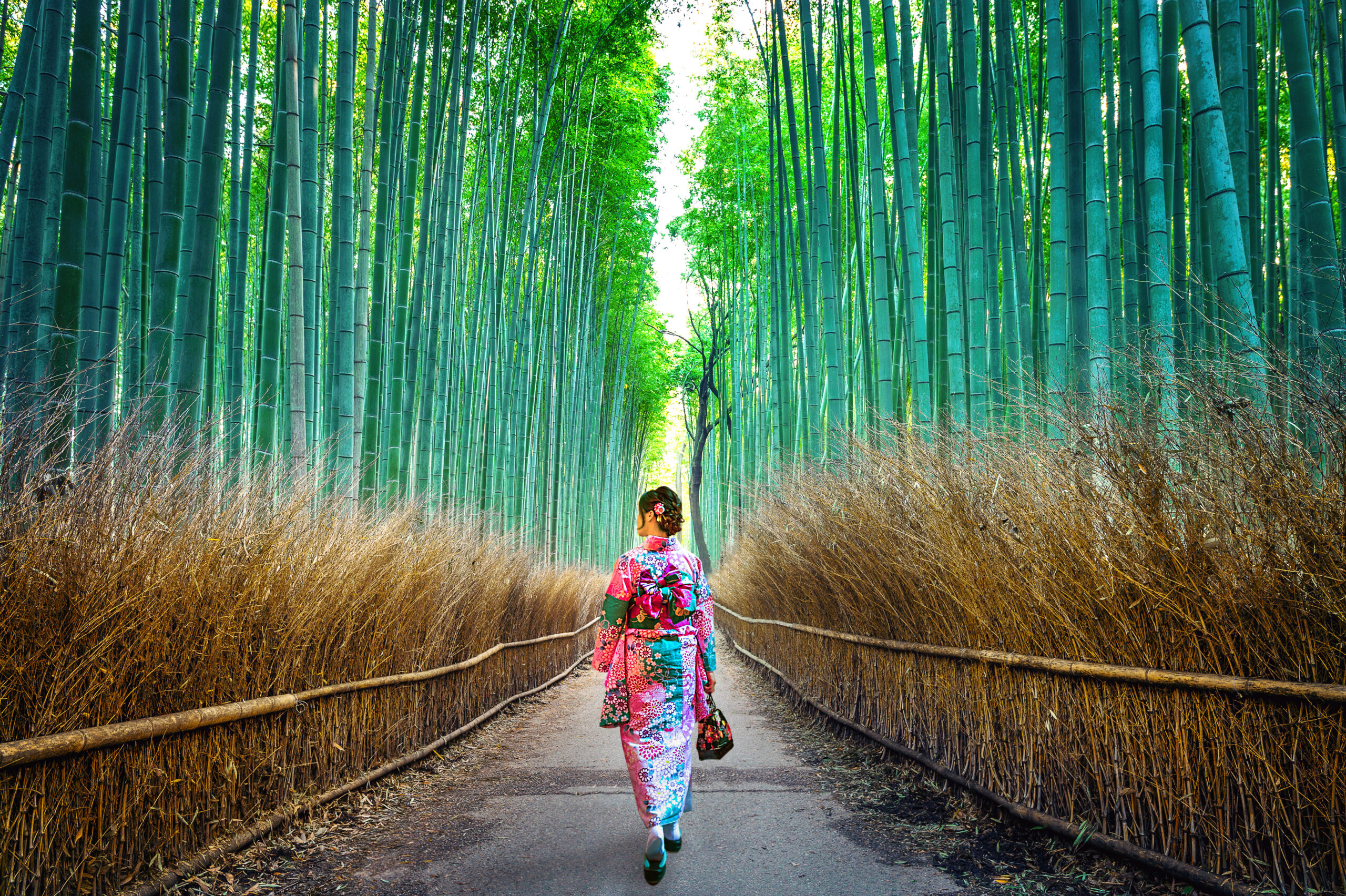
Often imagined through a familiar set of images: crowded Tokyo crossings, quiet Kyoto temples, neon streets glowing after rain, and cherry blossoms drifting through spring air. But beyond those famous scenes are surreal destinations in Japan.
Across Japan are landscapes so unusual they seem disconnected from ordinary geography. Entire villages exist inside volcanic craters. Hills transform into oceans of blue and red depending on the season. Forests become frozen creatures during winter storms. Sand dunes stretch beside the sea like a misplaced desert. Deep mountain gorges look as though they belong in mythology rather than modern travel guides.
These places do not simply look beautiful. They feel cinematic. Dreamlike. At times, almost impossible.
Here are five places in Japan that genuinely do not feel real.
Further reading: Japan’s Most Underrated Cities for First-Time Visitors
Aogashima Island: Japan’s Hidden Volcanic World

Far south of Tokyo, isolated in the Philippine Sea, sits one of the strangest inhabited places in Japan: Aogashima Island.
At first glance, the island does not even look real. From above, it appears as a massive volcanic crater rising out of the ocean. Inside that crater sits another smaller volcanic formation, creating a rare “volcano within a volcano” landscape that feels more like science fiction than everyday life.
What makes Aogashima even more surreal is the fact that people actually live there.
A tiny community exists within this remote volcanic world, surrounded by steep cliffs and rough seas that often make access difficult. Ferries are frequently canceled due to weather, and reaching the island can feel like an expedition rather than a normal trip.
The isolation adds to its atmosphere. There are no massive crowds, no busy shopping districts, and no sense of modern urgency. Instead, Aogashima feels suspended between worlds — a hidden civilization floating in the Pacific Ocean.
At night, with almost no city lights, the stars above the crater become overwhelming. During the day, the green volcanic landscape contrasts sharply against the deep blue sea surrounding it. The entire island feels cinematic in a way that photographs struggle to fully capture.
Few places in Japan feel as distant from reality as Aogashima.
Hitachi Seaside Park: The Hills That Change Color

Some landscapes feel surreal because of their scale. Others feel surreal because the colors seem impossible.
Hitachi Seaside Park is one of those places.
Located in Ibaraki Prefecture, the park has become internationally famous for its seasonal flower displays, particularly the endless blue nemophila flowers that bloom during spring. When fully in season, the hills appear covered in soft blue clouds stretching toward the sky. The line between earth and horizon almost disappears.
Photographs of the park often look heavily edited. But the colors are real.
In autumn, the scenery transforms again. The park’s kochia bushes shift into deep shades of red, turning entire hillsides into landscapes that resemble digital artwork or fantasy films.
What makes Hitachi Seaside Park feel so unusual is how dramatically it changes throughout the year. It is almost like visiting two different worlds depending on the season.
Despite its popularity, the park still manages to create moments that feel strangely quiet and dreamlike, especially early in the morning when the fields are covered in soft light and moving wind.
The experience feels less like sightseeing and more like walking through a painting.
Zao Onsen Ski Resort: Japan’s Frozen Snow Monsters

Winter in Japan can be beautiful. But in Zao, it becomes something stranger.
High in the mountains of Yamagata Prefecture, the forests surrounding Zao transform every winter into what locals call “Snow Monsters,” or juhyo. These massive frozen formations occur when heavy snow and freezing winds coat the trees layer by layer until their original shapes disappear completely.
The result is both beautiful and unsettling.
Entire mountainsides become filled with towering white figures that resemble frozen creatures standing silently in the snow. During storms, visibility drops and the landscape begins to feel almost alien.
At night, the illuminated snow monsters create an even more surreal atmosphere. Shadows stretch across the frozen terrain while glowing white shapes emerge from the darkness like statues from another world.
Unlike many winter destinations that feel cozy or romantic, Zao feels mysterious. The silence of the mountains adds to the experience. Snow absorbs sound so completely that even crowded areas can feel strangely still.
The snow monsters only exist under very specific weather conditions, making them one of Japan’s most unusual seasonal phenomena.
For many travelers, seeing them in person feels less like visiting a ski resort and more like stepping onto another planet.
Tottori Sand Dunes: Japan’s Impossible Desert

When most people imagine Japan, deserts are usually the last thing that come to mind.
That is exactly why the Tottori Sand Dunes feel so surreal.
Stretching along the coast of the Sea of Japan, these dunes form the country’s largest sandy landscape. Wind continuously reshapes the terrain, creating ripples and patterns that shift almost daily.
The scenery feels geographically wrong in the best possible way.
Standing atop the dunes, it becomes easy to forget you are still in Japan. The landscape looks more like something from North Africa or the Middle East than East Asia. The contrast becomes even stranger when you realize the ocean sits directly beside the sand.
At sunrise and sunset, the dunes become especially cinematic. Shadows stretch across the ridges while the changing light creates dramatic textures in the sand. The emptiness of the landscape adds to the atmosphere. Unlike Japan’s busy urban centers, the dunes feel vast, quiet, and exposed.
There is also something strangely calming about the simplicity of the scenery. No neon signs. No train sounds. Just wind, sky, and endless sand.
It is one of the few places in Japan where the landscape feels almost completely detached from the country’s usual identity.
Takachiho Gorge: A Gorge From Mythology

If Aogashima feels like science fiction and Tottori feels like another continent, Takachiho Gorge feels like mythology.
Located in Miyazaki Prefecture, this dramatic gorge was formed by volcanic activity long ago, creating towering basalt cliffs that rise sharply above emerald-colored water. The most iconic view comes from small rental boats drifting beneath the gorge’s waterfalls and stone walls.
Everything about the scenery feels cinematic.
Mist often hangs over the river in the morning, softening the cliffs and giving the landscape an almost spiritual atmosphere. Sunlight filtering through the narrow gorge creates reflections that make the water glow deep green.
Takachiho is also deeply connected to Japanese mythology. According to legend, the area is tied to stories about the gods of Shinto tradition, including tales connected to the sun goddess Amaterasu.
That connection to mythology changes how the landscape feels. Takachiho does not simply look beautiful — it feels sacred.
Even the silence is different there. The sound of water echoing through the gorge creates an atmosphere that feels ancient and untouched.
Among Japan’s natural destinations, few places balance beauty, mystery, and mythology as powerfully as Takachiho Gorge.
Japan’s Most Surreal Destinations
One of the most surprising things about Japan is how dramatically its landscapes can change from region to region. Within a single country, travelers can encounter volcanic islands, frozen forests, flower-covered hills, deserts, and mythological gorges.
These places reveal a side of Japan that many visitors never expect to find.
They are not just scenic destinations. They are places that create a feeling — the sense that reality has shifted slightly, even if only for a moment.
And sometimes, those are the places people remember most.
Further reading: Sightseeing in Japan: Top Destinations