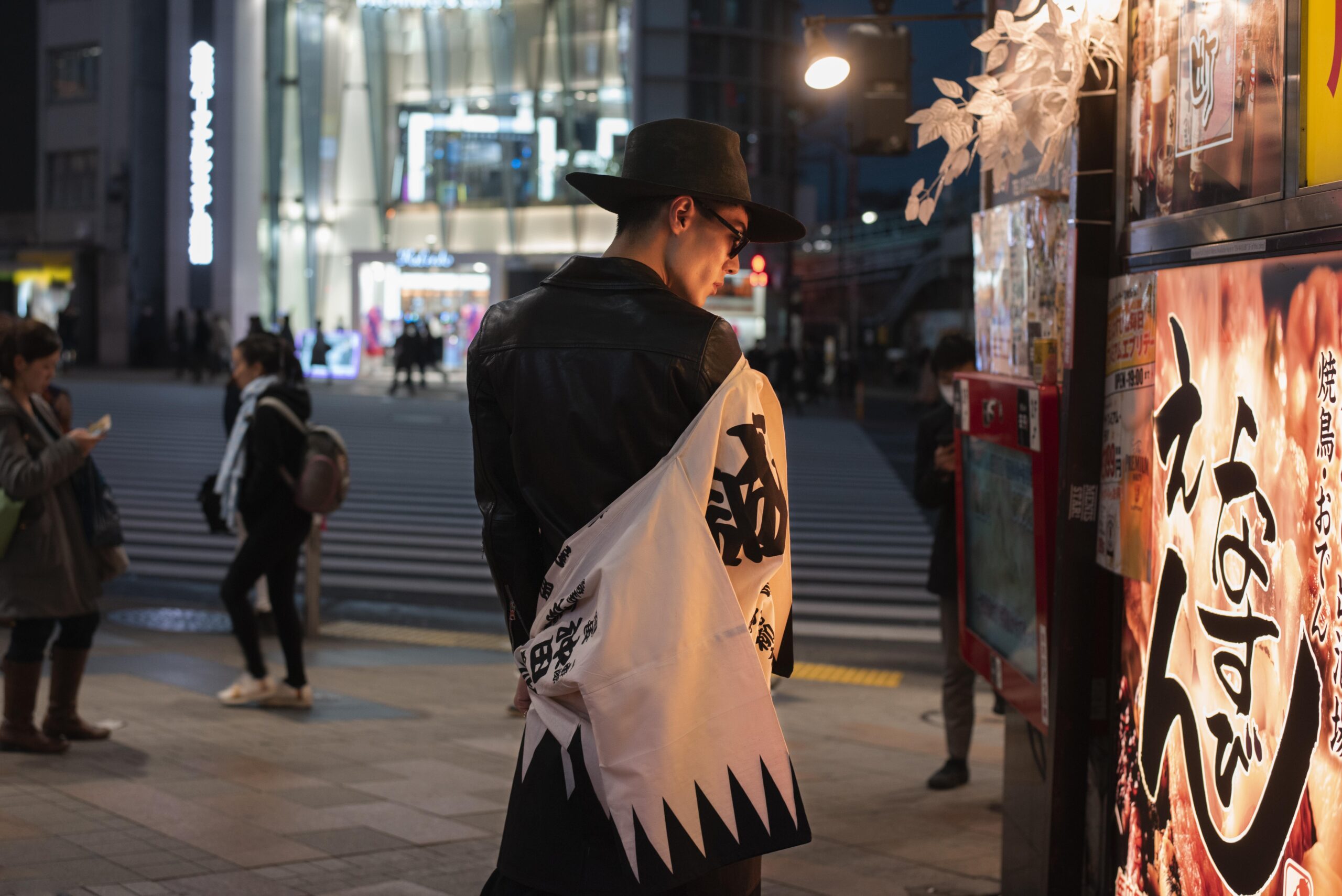
When people imagine Japan, they often picture quiet temples, meticulous etiquette, and orderly cities. Yet just beneath that surface lies a vibrant culture of self-expression that thrives in public spaces. Japanese street culture may not look like the graffiti-heavy, protest-driven scenes of New York or Berlin, but it is no less powerful.
In Japan, the street becomes a stage—carefully negotiated, subtly rebellious, and deeply creative. From the open weekends of Yoyogi Park in Tokyo to the neon-lined backstreets of Osaka’s Amerika-mura, street culture reveals how Japanese youth carve out identity within a society that values harmony.
Understanding these spaces means understanding modern Japan itself.
Further reading: Hanami Bento: Beautiful Picnic Foods for Cherry Blossom Season
What “Street Culture” Means in Japan

In Western contexts, street culture often carries a tone of confrontation—political graffiti, underground music, countercultural defiance. In Japan, street culture is quieter but equally expressive. It balances individuality with social awareness.
Public behavior in Japan is shaped by unspoken rules: avoid disturbing others, maintain cleanliness, respect shared space. Within these constraints, young people have developed creative ways to express themselves without disrupting harmony.
Street culture here is often:
- Temporal (weekend gatherings, seasonal events)
- Location-specific (certain parks or neighborhoods)
- Visual-first (fashion and aesthetics over slogans)
It’s less about shouting and more about presence.
Yoyogi Park: Tokyo’s Open-Air Cultural Stage

On weekends, Yoyogi Park transforms. Just steps from Harajuku and the bustling energy of central Tokyo, the park becomes a gathering ground for dancers, musicians, cosplayers, and hobby communities.
In the 1980s and 1990s, Yoyogi became famous for its rockabilly dancers—leather-clad enthusiasts who performed energetic routines near the park’s entrance. Their slicked-back hair and vintage Americana style contrasted sharply with Japan’s polished corporate image. They weren’t protesting; they were performing identity.
Today, you might encounter:
- K-pop dance cover groups rehearsing choreography
- Indie musicians with portable amps
- Cosplay photographers capturing elaborate costumes.
- Fitness and hobby meetups
What makes Yoyogi special is not chaos but coexistence. Groups gather in defined pockets. Noise levels are controlled. There’s an understanding: you can express yourself—just don’t intrude on others.
This delicate balance reflects Tokyo itself: dense, energetic, yet remarkably orderly.
Fashion as Identity: Tokyo’s Street Style Roots

Yoyogi Park doesn’t exist in isolation. It sits next to Harajuku, one of Japan’s most internationally recognized fashion hubs. While Harajuku’s Takeshita Street is commercial and crowded, the park has historically served as a space where fashion could breathe.
Tokyo street fashion has long emphasized concept over trend. From layered avant-garde silhouettes to hyper-feminine kawaii aesthetics, self-expression here is deliberate. Outfits are curated like art installations.
Unlike fast-moving Western trends, Tokyo street style often:
- Draws heavily from niche subcultures
- Recycles vintage and DIY elements
- Mixes global influences with hyper-local creativity
Though commercialization and social media have softened some extremes, Tokyo remains a laboratory for aesthetic experimentation.
Osaka’s Amerika-mura: Counterculture With Attitude

Travel west to Osaka and the tone shifts.
Amerika-mura (literally “American Village”) emerged in the 1970s and 1980s as a hub for imported American clothing, vinyl records, and surf culture. Located in the Shinsaibashi area, it developed into Osaka’s youth playground—colorful, slightly chaotic, and proudly alternative.
Compared to Tokyo’s polished presentation, Osaka’s street culture feels looser. Murals decorate walls. Skateboarders gather near Triangle Park. Vintage shops and underground live houses line narrow streets.
Osaka’s personality shapes the neighborhood. The city is known for:
- Direct humor
- Casual communication style
- Entrepreneurial energy
That openness translates into a street culture that feels less restrained. Hip-hop fashion, skate aesthetics, and indie music scenes have deep roots here. While Tokyo experiments with visual precision, Osaka radiates attitude.
Tokyo vs. Osaka: Two Styles of Self-Expression
Comparing Yoyogi Park and Amerika-mura is less about rivalry and more about regional identity.
Tokyo’s Street Energy
- Structured and spatially organized
- Fashion-forward and concept-driven
- Influenced by global fashion media
Osaka’s Street Energy
- More spontaneous
- Rooted in music and subcultural communities
- Community-oriented and humor-infused
Neither is more authentic. Both reflect their cities’ broader personalities. Tokyo represents controlled dynamism; Osaka thrives on expressive warmth.
Music, Dance, and Performance in Public Space

Street dance has become one of Japan’s most visible youth movements. Breakdance, freestyle hip-hop, and K-pop choreography groups practice publicly, especially on weekends.
These gatherings are rarely random. Performers often:
- Choose spots known for tolerance
- Coordinate via social media.
- Respect noise regulations
Japan’s regulatory environment means that truly spontaneous busking is limited compared to Western cities. Yet creativity adapts. Portable speakers replace large amps. Social media extends live performance beyond the park.
Street culture is no longer confined to physical streets—it lives simultaneously online.
Social Media and the Evolution of Street Identity

Instagram and TikTok have reshaped Japanese street culture. Outfits once seen only by passersby now reach global audiences. Micro-trends can rise and fade in weeks.
This has brought:
- Increased international visibility
- Faster commercialization
- Shorter cultural lifespans
At the same time, online platforms help preserve scenes that might otherwise disappear due to redevelopment or stricter city management.
Street culture is now hybrid—rooted in physical spaces but amplified digitally.
Is Japanese Street Culture Changing?
Yes—and constantly.
Urban redevelopment, tourism growth, and public behavior regulations have reduced some of the raw spontaneity of past decades. Harajuku’s most extreme fashion tribes are less visible than in the 1990s.
But disappearance is not the same as decline. Culture evolves.
Today’s youth may express individuality through:
- Curated thrift aesthetics
- Cross-genre music collaborations
- Online-first communities that gather offline occasionally
Japanese street culture remains alive—simply more fluid.
When to Go: Experiencing Street Culture Firsthand
If you want to witness Japanese street culture in action, timing matters.
Yoyogi Park (Tokyo)
- Best Days: Sunday afternoons
- Best Seasons: Spring (March–May) and Autumn (October–November)
- What to Expect: Dance groups, hobby gatherings, casual performances
- Tip: Visit between 1 PM and 5 PM for peak activity
Weekdays are usually quiet. Sundays offer the most vibrant atmosphere without feeling overwhelming.
Amerika-mura (Osaka)
- Best Days: Saturday and Sunday evenings
- Best Seasons: Year-round, though spring and fall are most comfortable
- What to Expect: Street fashion spotting, skate culture, live house music nearby
- Tip: Explore side streets—creativity often hides off the main path
Amerika-mura’s energy builds into the evening, especially near Triangle Park.
Why Street Culture Matters in Understanding Japan
Japanese street culture challenges stereotypes of uniformity. It reveals a society negotiating individually within collective norms. It shows how rebellion can exist without destruction—how self-expression can flourish inside structure.
From the open lawns of Yoyogi Park to the graffiti-speckled corners of Amerika-mura, street culture demonstrates that Japan is not just tradition and precision. It is youth, rhythm, fashion, and experimentation.
Observe respectfully. Watch how groups share space. Notice how the expression unfolds without overwhelming others. In these subtleties, you’ll glimpse the deeper values shaping modern Japan.
Street culture here is loud—but it speaks volumes.
Further reading: Japan’s Most Underrated Cities for First-Time Visitors