To understand why Japan is moving so aggressively into food technology, you need to understand the scale of the challenge it’s responding to.
Japan has always had a complicated relationship with food. On one hand, the country is home to one of the most revered culinary traditions on the planet — obsessive in its craft, seasonal in its philosophy, precise almost to the point of spirituality. On the other hand, Japan is confronting a demographic and agricultural crisis that threatens the very systems that produce that food. An aging population, a shrinking workforce, and a persistent drive toward national food security have collided to produce something unexpected: Japan is now one of the world’s most ambitious laboratories for the future of food.
This isn’t food tech as a Silicon Valley side project. In Japan, it is a national strategy.
Further Reading: Regional Japanese Food You’ve Probably Never Tried
The Problem Japan Is Solving

To understand why Japan is moving so aggressively into food technology, you need to understand the scale of the challenge it’s responding to.
Japan’s population is declining and aging faster than almost any other developed nation. By some projections, more than one in three Japanese people will be over 65 by 2040. The agricultural sector is feeling this acutely: the average age of a Japanese farmer is now over 67, and the number of people entering farming is nowhere near enough to replace those retiring or passing away. Rural areas that once fed the country are hollowing out. Fields are going unworked.
At the same time, Japan imports roughly 60 percent of its food by caloric value — a figure that makes policymakers deeply uncomfortable, particularly in an era of global supply chain volatility. The pandemic, climate disruption, and geopolitical tensions have made food security feel less like a background concern and more like a frontline issue.
The result is a government that is actively funding, incentivizing, and championing food tech as a strategic national priority. The Ministry of Agriculture, Forestry, and Fisheries has set explicit goals around domestic food production. The private sector has responded with investment, research, and some genuinely world-class innovation.
Cellular Agriculture: Lab-Grown Meat, Japanese Style
Cellular agriculture — the science of growing animal protein from cells rather than whole animals — is being pursued globally, but Japan is bringing its own particular precision to the field. Japanese researchers and food tech companies are working on lab-grown meat, cultivated seafood, and cell-based fish products that align with the country’s dietary patterns and culinary culture.
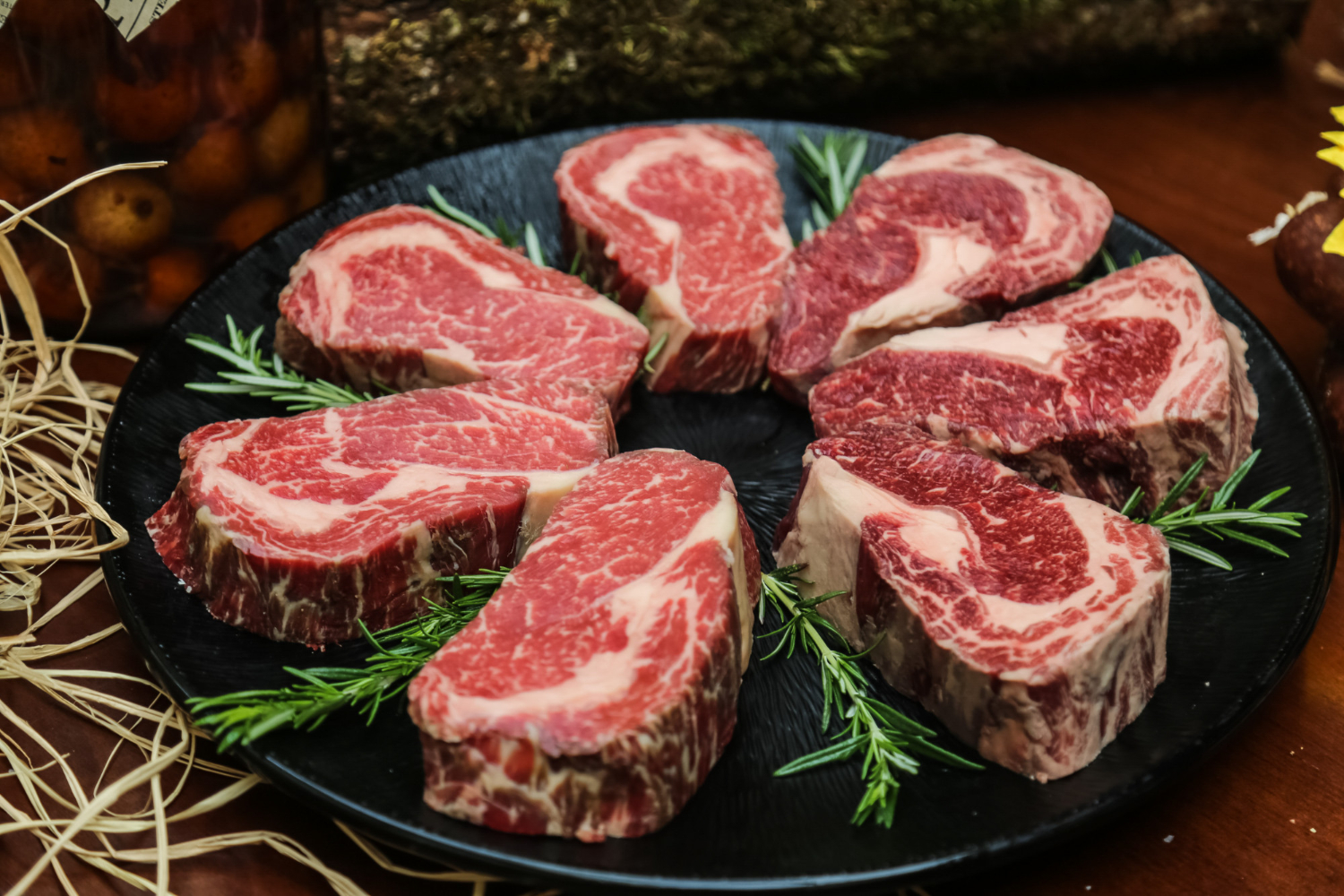
This matters for a specific reason: Japan isn’t just trying to grow a beef patty in a lab. It’s trying to grow wagyu — the supremely marbled, flavor-intensive beef that is central to Japanese culinary identity. Several research initiatives have focused specifically on replicating the fat distribution and texture of wagyu through cellular methods, which is a considerably more complex technical challenge than producing standard protein. Success here would mean high-value cultured meat that preserves cultural significance while eliminating the environmental and logistical costs of conventional livestock farming.
Cultivated seafood is another frontier with obvious resonance in a country where fish is foundational to the diet. Startups and university labs are working on cultured tuna, eel, and other species under pressure both from overfishing and the complexity of conventional aquaculture.
Molecular Farming: Growing Proteins Like Crops

Molecular farming is a quieter revolution, but one with enormous implications. The concept involves engineering plants — or microorganisms — to produce specific proteins, enzymes, or bioactive compounds that would otherwise require animals or complex industrial processes to obtain.
In practical terms, this could mean rice plants that produce a targeted nutritional protein, or fermentation tanks that grow functional food ingredients without any animal involvement at all. Japan, with its deep tradition of fermentation technology (think miso, soy sauce, sake, natto), has a genuine cultural and scientific head start in this area. The leap from traditional fermentation to precision fermentation is, in many ways, a natural extension of something Japan has been doing for centuries.
Several Japanese companies are now developing fermentation-derived proteins and functional ingredients aimed at both domestic consumption and export markets. The long-term vision is a food system less dependent on imported animal feed, less vulnerable to climate-disrupted harvests, and more capable of feeding an aging population with targeted nutritional profiles.
Smart Automated Farming: Running Farms Without Farmers
Perhaps the most visually striking element of Japan’s food tech transformation is what’s happening on and in its farms. With a farming workforce that is literally aging out of the field, automation has moved from novelty to necessity.
Japan’s smart farming sector now encompasses a remarkable range of technologies. Agricultural drones survey and spray fields across Hokkaido’s vast flatlands. AI-powered sensors monitor soil conditions, moisture levels, and plant health in real time. Autonomous tractors — developed in part by manufacturers like Kubota and Yanmar, both Japanese companies with deep agricultural roots — are being deployed at scale on rice paddies and vegetable farms.
Perhaps most striking are Japan’s plant factories: fully indoor, vertically stacked growing environments where lettuce, herbs, and leafy greens are grown under LED lighting with precisely controlled humidity, temperature, and nutrition. These facilities can operate with minimal human labor, can produce year-round regardless of weather, and can be located near urban centers — cutting both the labor requirement and the supply chain distance. Japan already has one of the world’s densest networks of vertical farms, and the sector is expanding rapidly.
The next frontier is robotics capable of handling the delicate harvesting work that automation has historically struggled with — picking strawberries, selecting ripe tomatoes, and thinning grape clusters. Japan’s robotics industry, already world-class, is being directed at this challenge with considerable urgency.
Culinary Robotics: Machines in the Kitchen

Japan’s restaurant industry is experiencing its own labor crisis. Running a ramen shop, a sushi restaurant, or a convenience store kitchen requires consistent staffing that is increasingly hard to find in a country where the working-age population is declining. The solution being piloted across the country is culinary robotics — and Japan is further along in deploying it than almost anywhere else.
Automated ramen preparation systems are already in commercial operation. Robotic sushi machines — some capable of producing standardized nigiri at high volume — have been in use for years in supermarkets and chain restaurants. Conveyor belt sushi (kaiten-zushi) restaurants are now deploying AI systems to manage ordering, preparation, and delivery with minimal human input.
These aren’t gimmicks. They’re operational responses to a genuine shortage of kitchen labor, and the technology is advancing quickly. Several companies are developing more sophisticated robotic systems capable of handling multi-step cooking processes — grilling, seasoning, plating — with the consistency that Japanese food culture demands.
The goal isn’t to remove human craft from Japanese food. It’s to use automation for the high-volume, repetitive tasks that currently consume most of the labor hours in food production and preparation, freeing human workers to focus on the elements of cooking that actually require human judgment and skill.
Why This Matters Beyond Japan
Japan’s food tech push is, at one level, a domestic response to a domestic problem. But the solutions being developed here have global implications. Lab-grown protein, precision fermentation, vertical farming, and culinary robotics are all going to be part of the global food system within a generation — and the companies and research institutions leading the development of these technologies will shape how they unfold.
Japan’s particular combination of assets — precision manufacturing culture, world-class robotics, deep fermentation knowledge, and a government willing to treat food security as a strategic priority — makes it a genuinely formidable competitor in this space.
For visitors to Japan, this technological transformation is already visible in small ways: the robotic restaurant, the vending machine that knows what you want, the impossibly consistent bowl of ramen that emerged from a machine in the kitchen. These are early signals of something much larger taking shape.
Japan has always approached food as something worth taking seriously. It turns out that same seriousness, applied to the future of food production, might be one of the most important contributions the country makes to the world in the decades ahead.
Keep Exploring: Warning: These 10 Japanese Dishes Are So Good, You’ll Crave Them Every Day