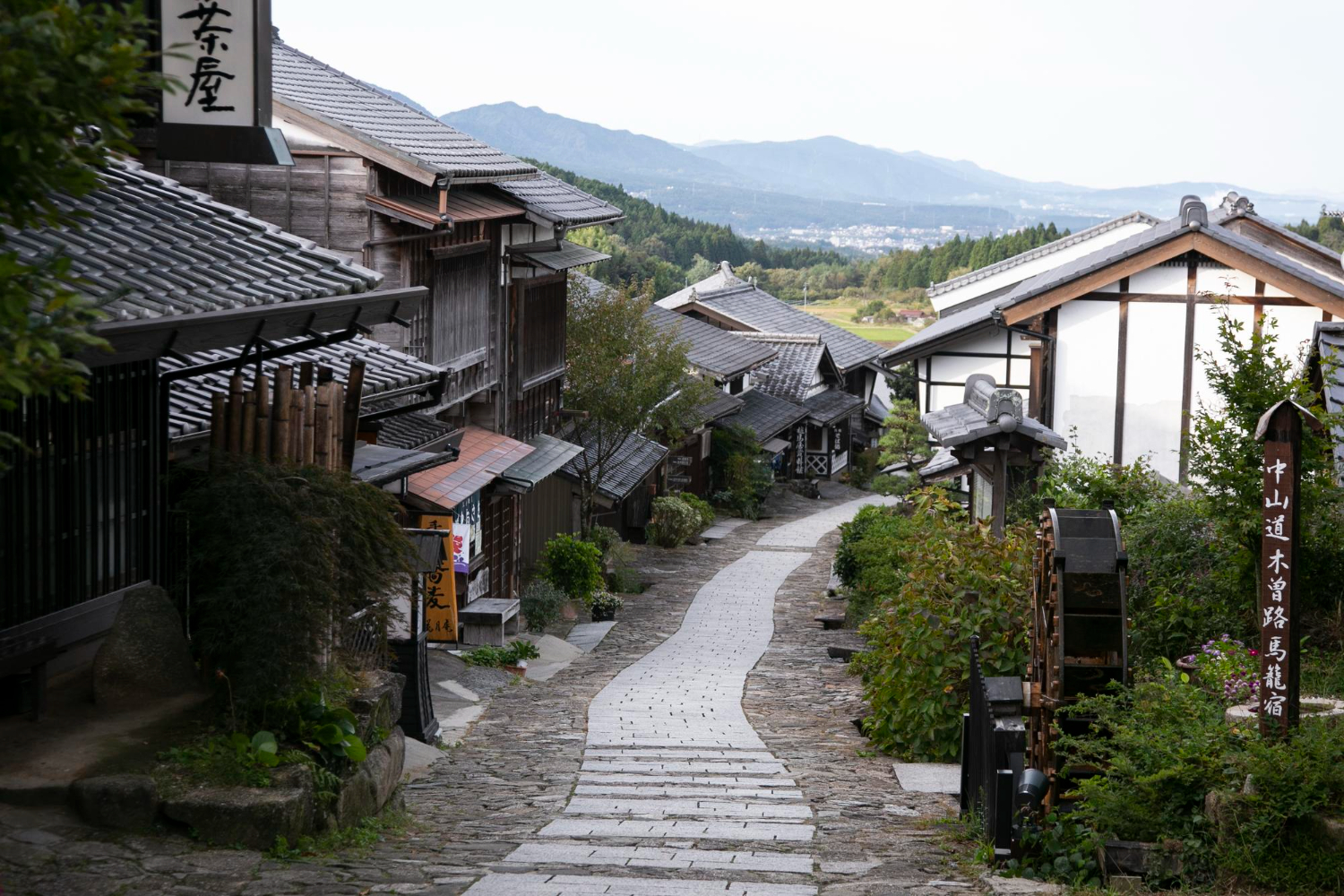
There’s a particular kind of exhaustion that comes with visiting somewhere famous at the wrong time. You’ve seen the vermillion gates marching through cedar forest, the old machiya townhouses lining a quiet canal. Then you arrive with tour buses parked out front and a dense crowd where you have to wait for a gap in the foot traffic to take a step. Kyoto is in peak season. Tokyo on the weekend. The experience is still worthwhile, but it’s different from the one you imagined.
Japan is becoming increasingly aware of this tension. The tourism boom that followed the country’s post-pandemic reopening brought record visitor numbers. The response from both travelers and the Japanese government has been to rediscover the rest of the country.
Rural travel, slower itineraries, and genuinely off-the-beaten-path destinations are now among the fastest-growing trends in Japan tourism. And what’s waiting in those quieter places might be the most authentic Japan experience available right now.
Further Reading: Japan’s Most Underrated Cities for First-Time Visitors
The Over-Tourism Problem, in Plain Terms
Let’s name it directly. Kyoto has introduced tarpaulins to block views, fencing to restrict access to alleys, and bans on tourists in geisha districts. The frustration is real. The locals dealing with crowds in their neighborhoods, residents priced out of areas, and the noise of millions of visitors in the same area.
Tokyo’s famous areas and experiences remain worthwhile, but the infrastructure around them is straining. The honest question for any traveler is: Does it have to be here? Is there somewhere less pressured that offers something equally rich, or richer?
In most cases, the answer is yes. Japan is an archipelago of extraordinary depth. The famous spots are famous for a reason — but they represent a tiny fraction of what’s available.
Kanazawa: The City That Quietly Outdoes Itself
If you asked Japanese travelers where to go for the Kyoto experience without the crowds, they would say Kanazawa.
Located on the coast in Ishikawa Prefecture, roughly two and a half hours from Tokyo by Shinkansen, is Kanazawa. One of Japan’s best-preserved castle cities. Its survival after World War II is a rarity that makes walking through it feel different from reconstructed heritage elsewhere.
The Higashi Chaya district is the most famous of the city’s three geisha entertainment districts. It’s a preserved street of lattice wooden teahouses where the chaya culture has continued unbroken for centuries. Samurai districts, particularly Nagamachi, offer a different texture. They have narrow lanes, earthen walls, and merchant houses that have been carefully maintained as both residences and museums.
Then there is Kenroku-en. Consistently ranked among Japan’s three most celebrated landscape gardens, it sits on a hill above the city and shifts dramatically with the seasons — snow-covered in winter with its famous yukitsuri rope arrangements supporting the pine branches, explosive with plum and cherry blossom in spring, vivid with maple in autumn. Unlike many famous gardens, you can move through Kenroku-en at your own pace, sit on a bench without being immediately surrounded, and actually think.
Kanazawa also has a serious culinary reputation, and the 21st Century Museum of Contemporary Art, designed by SANAA, is a genuinely world-class institution. This is not a compromise destination. It’s a destination that hasn’t been discovered at the same scale as others, and that is what makes it so rewarding now.
Japan’s Border Islands: The New Frontier of Off-the-Beaten-Path
While Kanazawa represents an established alternative that’s growing in visibility, Japan’s border islands represent something different. They are a genuinely developing frontier for travel, with active government policy behind the push.
Japan’s remote island territories have long been caught between their strategic geopolitical significance and their economic marginalization. Many of these islands, including those in the Nansei chain stretching toward Taiwan and the more northerly disputed island chains, face declining populations, aging communities, and limited economic activity.
In response, the Japanese government has enacted legislation specifically designed to boost tourism infrastructure on these remote islands. The framework includes investment in accommodation, transport links, and local tourism development — with the explicit goal of turning geographic remoteness from a barrier into an appeal.
For travelers, this is genuinely exciting. Islands like Tsushima in the Korea Strait — historically significant as the site of the 1905 naval battle and home to the endangered Tsushima leopard cat — are now increasingly accessible and rewarding. Yonaguni, Japan’s westernmost island, is a diving destination with submerged rock formations and hammerhead shark aggregations. The Goto Islands off Nagasaki, with their hidden Christian heritage sites and extraordinarily clear water, have seen visitor numbers grow as their UNESCO recognition brought renewed attention.
The common thread across these islands is unhurriedness. These are places where guesthouses know your name, where the fishing harbor is the social center of the day, where hiking trails lead to viewpoints you’ll share with no one. The infrastructure is developing rather than established, which means the experience rewards flexible, patient travelers — but for those willing to embrace it, the access to genuine, unperformed local life is extraordinary.
How to Travel the Quieter Japan
Making the shift from classic itinerary to under-tourism travel doesn’t require abandoning the famous sights entirely. It’s more about recalibrating the balance. A few principles that experienced travelers in Japan are gravitating toward:
Choose shoulder cities as your base
Rather than staying in Kyoto, consider Kanazawa, Matsuyama, Hirosaki, Takayama, or Kagoshima as your home base and make day trips outward. The sightseeing is equivalent; the daily experience is incomparably calmer.
Travel in the direction trains don’t go
Japan’s Shinkansen network is brilliant, but it funnels people between the same nodes. Slower regional lines — the Isan Loop Line in Shikoku, the Sanin Main Line along the Japan Sea coast, the Hisatsu Orange Railway in Kyushu — pass through places that see a fraction of the visitor traffic and are no less beautiful.
Look for UNESCO designations that haven’t yet gone mainstream
The Hidden Christian Sites of the Nagasaki region, the Jomon archaeological sites in the north, the satoyama landscapes of the Noto Peninsula — these have the recognition that signals genuine significance but not yet the crowds that follow saturation coverage.
Give islands serious consideration
Japan has over 400 inhabited islands. A handful are famous. The rest are waiting.
The Other Japan Is the Real One
There’s a slightly uncomfortable truth embedded in the over-tourism conversation: the most famous version of a place is often not the most authentic one. The Kyoto that exists in the cultural imagination — quiet, meditative, deliberately beautiful — is most available at dawn on a Tuesday in November, not at noon in April when the cherry blossoms are at their absolute peak.
Japan’s quieter regions haven’t been polished for mass consumption in the same way. The guesthouses aren’t international chains. The menus may require some pointing. The local festival isn’t listed on any major travel platform. These are features, not limitations.
The travelers returning from Kanazawa, from Tsushima, from a tiny fishing village on an island with no English signage, tend to describe something harder to find in the famous places: the feeling of actually being somewhere, rather than visiting a version of somewhere that exists primarily to be visited.
That feeling is still available in Japan. You just need to be willing to look slightly further.
Keep Exploring: 5 Surreal Destinations You Have to See in Japan