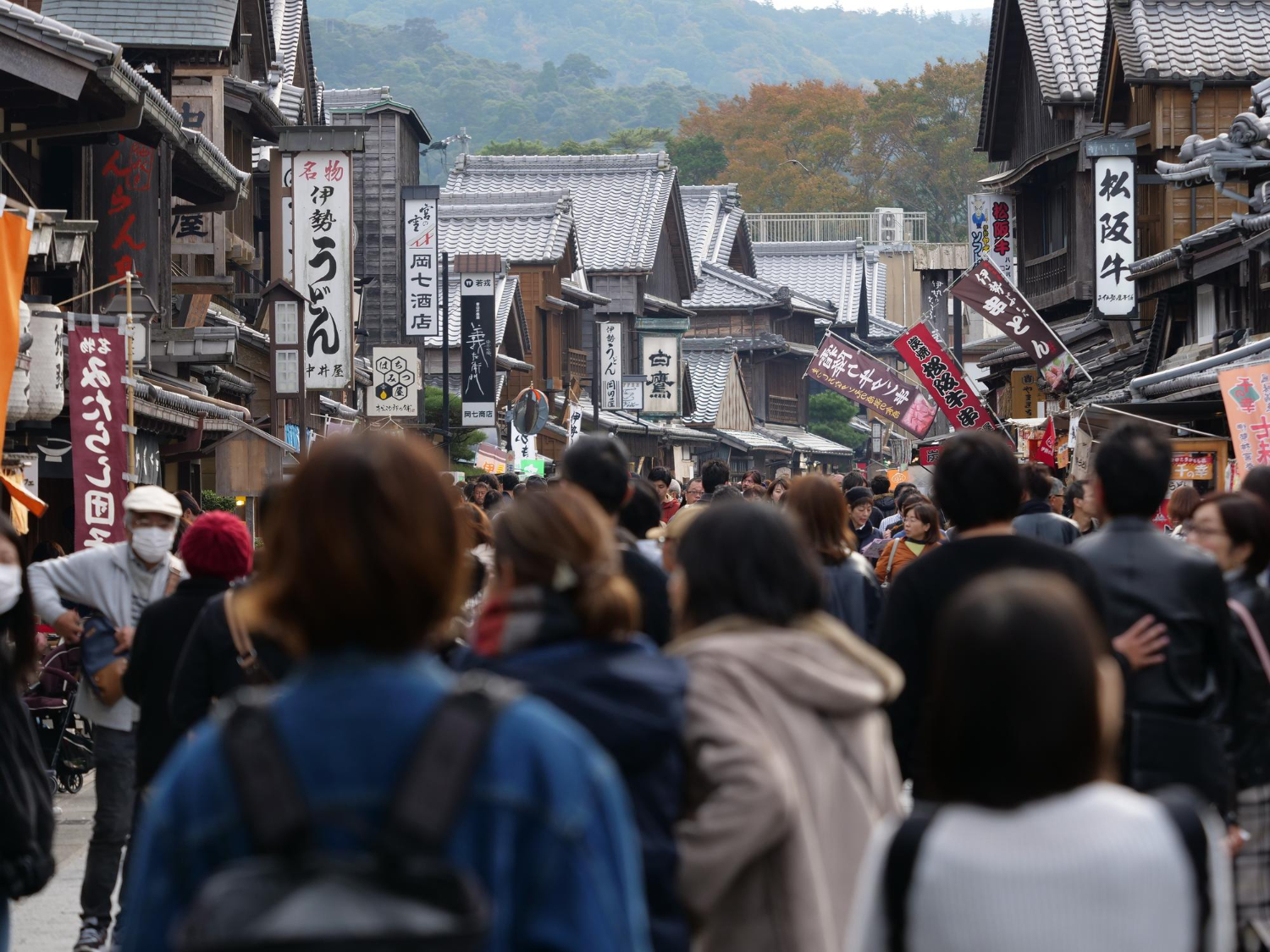
Somewhere along the way, a photograph became more important than the place it was taken. You’ve seen the result: the famous bamboo grove in Arashiyama reduced to a corridor of smartphone screens, the narrow lanes of Gion so packed that residents requested barriers to walk to their own front doors, the iconic red torii gates at Fushimi Inari so crowded at midday that the experience borders on anxious rather than sacred. The most beautiful heritage spaces are also, increasingly, its most pressured ones because of overtourism in Japan.
But Japan doesn’t tend to let problems fester without attempting a systematic response. Local governments and national tourism bodies have spent the last several years developing a range of surprisingly creative countermeasures. The goal is preservation alongside access. And some of what they’re doing is genuinely worth paying attention to, both as a blueprint for sustainable tourism globally and as practical guidance for anyone planning a trip.
Further Reading: Japan Travel Trends for 2026
The Scale of the Overtourism Problem

To understand why these measures are being rolled out, it helps to have a sense of the numbers. Japan welcomed a record number of foreign visitors in 2024, surpassing 36 million inbound tourists for the first time. The vast majority of that traffic concentrated in a handful of destinations and even smaller number of specific sites.
The consequences have been tangible. In Kyoto’s Gion district, signs in multiple languages ask visitors not to photograph geiko and maiko on the streets. Some private alleys have been entirely closed to non-residents. In Kamakura, local authorities trialed a “tourist tax” on the most congested routes. Mount Fuji’s Yoshida Trail saw a partial barrier erected to stop visitors climbing through the night.
These reactive measures tell you something about how acute the pressure has become. The more interesting story is what’s happening proactively.
The Off-Peak Push: Reframing When to Travel

One of the most consistent strategies being deployed across Japan’s heritage destinations is the active promotion of off-peak travel — not just as a budget tip, but as a genuinely superior experience.
Kyoto has been particularly direct about this. The city’s tourism board has launched campaigns explicitly targeting domestic and international visitors during January, February, and June — traditionally quiet periods that are, in the estimation of many long-term Japan residents, among the most beautiful times to be in the city. February brings plum blossoms and snow-dusted temple roofs. June is rainy season, which most visitors avoid but which turns Kyoto’s moss gardens and hydrangea-lined paths into something extraordinary. January is cold and clear and quiet in a way that lets you actually hear the gravel under your feet at a famous rock garden.
Similar campaigns have rolled out in Hiroshima, Nara, and Nikko. The framing matters: “visit in winter because it’s less crowded” is a weak sell. “Visit in winter because the city looks like this” — accompanied by images of mist over the Kamo River or lantern-lit streets empty of foot traffic — is something else.
Some municipalities have gone further, introducing dynamic pricing for popular sites that charges higher admission during peak hours and peak seasons, with discounts available for early morning visits or visits during historically quiet months. The nudge is financial, but the intention is distributional.
Alternative Routes: Redesigning How We Move Through a Place

Perhaps the most architecturally interesting set of interventions involves the physical redesign of visitor movement through popular destinations. Specifically, the development and promotion of alternative walking routes that relieve pressure on the most congested corridors.
Kyoto
Kyoto has invested significantly in signage, digital mapping, and printed guide materials that direct visitors to parallel routes through Higashiyama. Paths run alongside the famous Ninenzaka and Sannenzaka stone-paved lanes but through less-trafficked residential streets that offer equivalent historic character with a fraction of the footfall. For visitors who actually follow these routes, the reward is considerable. The chance to find a small shrine that isn’t on the primary itinerary, a centuries-old tofu shop with no queue, a garden gate that opens onto a view no Instagram account has yet made famous.
Nara
Nara has employed similar thinking around its deer park and temple complex. Officials have suggested walking circuits away from the main approach to Todai-ji Temple and through quieter forested sections. The deer are just as plentiful. The crowds are not.
Kamakura
In Kamakura, local tourism authorities have been developing the Kamakura Hiking Trails network as an alternative to the town’s congested main streets. Routes that connect major temples through the surrounding forested hills, offering elevated views and sites encountered from an unexpected direction. The trails aren’t new, but the infrastructure around them has been deliberately improved to make them accessible to international visitors who wouldn’t previously have known they existed.
Hakone
Hakone has experimented with distributing tourist flow across its multiple transport modes by staggering recommended itineraries so that not everyone arrives at the same point at the same time. It sounds simple, but the coordination required across multiple transport operators to make recommended timetables actually work is more complex than it appears.
Digital Tools and Real-Time Crowd Data

A newer layer of the response involves digital infrastructure. Specifically, the use of real-time crowd monitoring and data-driven visitor guidance to help people make better decisions about when and where to go.
Several of Japan’s most visited destinations now publish real-time or near-real-time crowd level data through official tourism apps and websites. Kyoto’s “Kyoto City Tourism Culture & Arts Promotion Foundation” dashboard allows visitors to check crowd density at major sites. Nikko has deployed pedestrian counting sensors at key entry points that feed live data into public-facing platforms.
The tourist boards in Kanazawa and Takayama have developed app-based itinerary tools that actively route visitors away from any emerging bottlenecks in real time, adjusting recommendations based on current conditions. It’s modest technology by global standards, but applied with Japanese precision, it has measurable effects on visitor distribution.
What This Means for How You Should Plan Your Trip
The practical upshot of all of this is that the infrastructure for a better experience is increasingly available.
Check the official tourism websites for your intended destinations before you build your itinerary. Many now publish specific guidance on quieter visiting times, alternative routes, and seasonal recommendations that aren’t driven by generic “best time to visit Japan” advice but by current, location-specific data. Download the relevant local apps if they exist. Take the suggested walking detour. Book the 7 am entry slot rather than the 10 am one.
And consider the deeper reframe that Japan’s tourism bodies are quietly proposing: that the most famous version of a famous place — the midday, peak-season, maximum-crowd version — is often not the best version. The Arashiyama bamboo grove at dawn, with mist in the canopy and birdsong audible, is a genuinely different experience from the same grove at noon in April. Both are available. Only one requires the willingness to set an early alarm.
Japan is asking its visitors to be thoughtful. That’s not a burden — it’s an invitation to travel better.
Keep Exploring: Must-Know Travel Tips for Foreigners in Japan